Home › Services › Biohazard Cleanup in Wellington, FL
Biohazard Cleanup in Wellington, FL
Lede: Some situations need more than a cleaning crew. Biohazard cleanup in Wellington, FL is the careful, regulated work that follows a trauma, an unattended death, or a serious illness in a home: removing what cannot be made safe, disinfecting what can, and handing the space back with dignity. You make one private call. We handle everything after that.
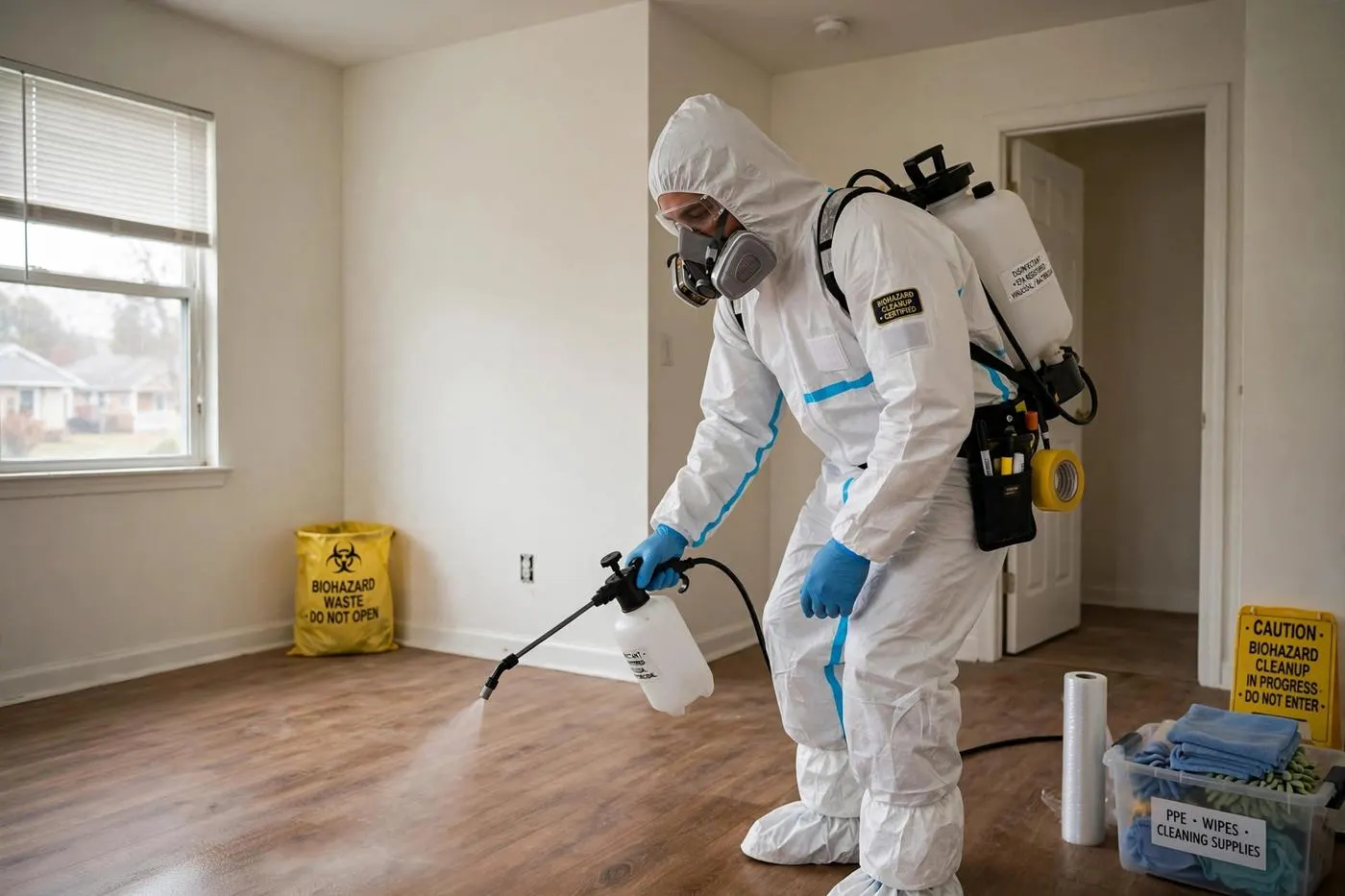
What biohazard cleanup in Wellington, FL covers
H2: Biohazard cleanup in Wellington, FL: what it covers, and when families call us
Most of our calls follow one of three situations. The first is a trauma at home: a death or a serious injury in a bedroom, a bathroom, or a garage. The second is a death that went undiscovered for a time, which happens in Wellington more often than people expect, because so many homes here sit closed for the summer season. The third is illness contamination, when a home needs a complete disinfection after a contagious sickness has passed through it.
We also clean scenes once law enforcement has finished its work. One honest point comes first: we cannot begin until the authorities release the scene. That release protects their investigation, and it protects you.
This is regulated work. Affected materials are removed, bagged, and disposed of as regulated waste under Florida rules, never in household trash. What remains is cleaned and disinfected surface by surface. If you are unsure whether your situation fits, call and describe it.
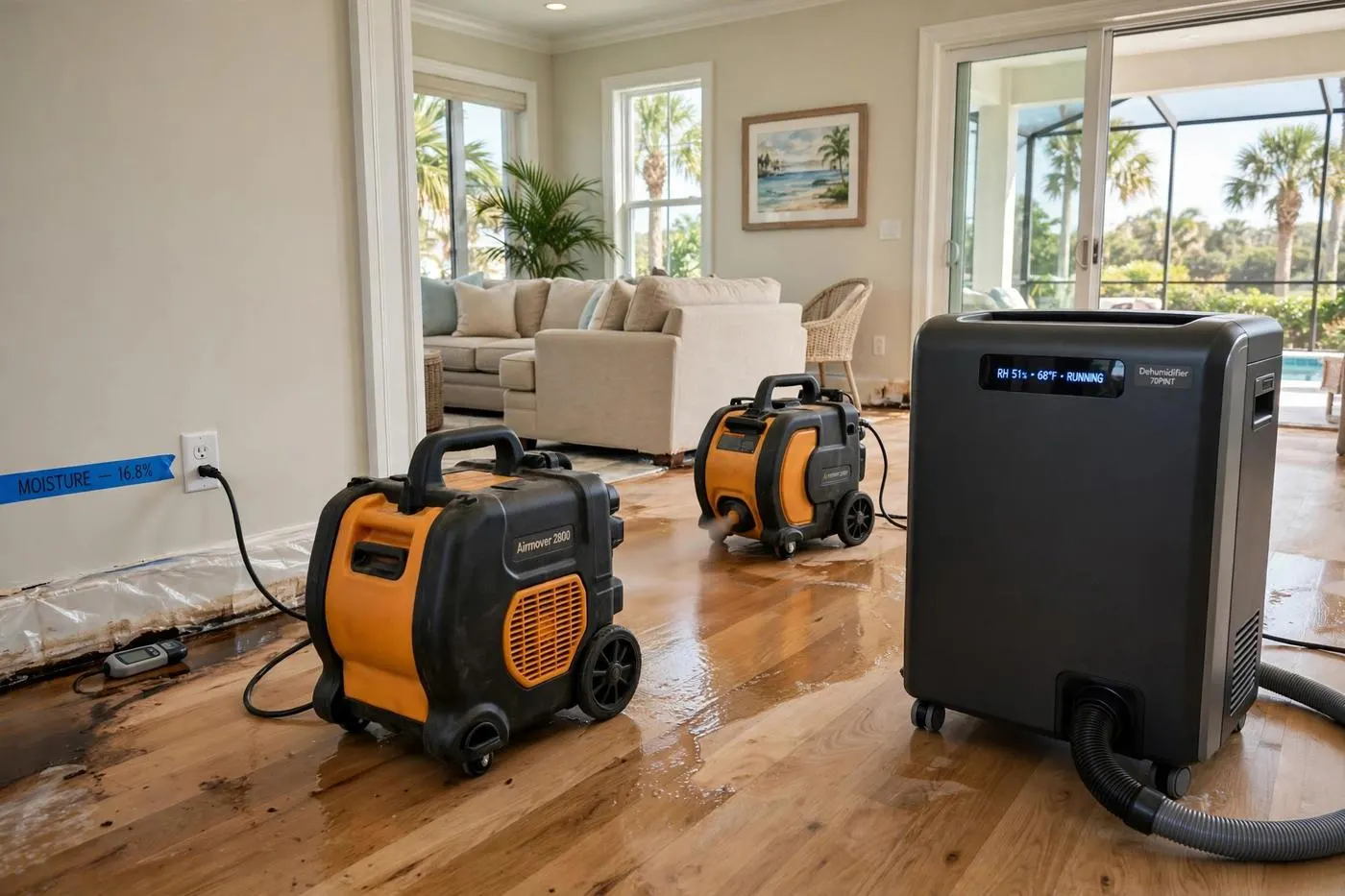
How we handle it
H2: What to expect, from the first call to the final walkthrough
1. The call. You speak with a person, not a script. We ask only what we need: what happened, where in the home it happened, and whether the scene has been released.
2. The walkthrough and written scope. We see the space in person, explain what will be removed and what will be cleaned, and give you a written scope before any work begins.
3. Containment. The affected area is sealed off from the rest of the home while we work.
4. Removal. Porous materials that absorbed contamination come out: carpet and padding, bedding, affected drywall, soft furnishings. These cannot be disinfected reliably, and we will not pretend otherwise.
5. Cleaning and disinfection. Every remaining hard surface is cleaned, then disinfected. Odor treatment is part of the same process.
6. Disposal and documentation. Removed materials leave as regulated waste. You receive documentation of what was done, for your records and for anyone you need to show it to.
7. The final walkthrough. We walk the space with you, or with your property manager, before the job is called finished.
Wellington homes, handled quietly
H2: Discretion is part of the job in a village like this
Wellington is a small place in the ways that matter. Neighbors notice unfamiliar trucks, and gated communities log every arrival. We coordinate gate access with your HOA or property manager so our arrival is orderly and unremarkable. Our crews do not discuss a job outside the job, ever.
Seasonal homes need a mention of their own. A house closed up in Palm Beach Polo or Versailles for the summer can hold an undiscovered situation far longer than an occupied home, and the scope grows with every week. If you watch a seasonal property, a call at the first sign of a problem keeps the work smaller. On equestrian properties, an incident in a barn or staff quarters gets the same careful protocol as the main house. Families arranging everything from out of state get one point of contact and documentation as the work proceeds.
Cost factors
H2: What the cost depends on
The honest answer is scope. Cost turns on the size of the affected area, the materials involved (flooring and subfloor add work that a hard-surface room does not), the volume of regulated disposal, and how long the situation stood before it was discovered.
We document everything for your insurer. Whether a policy responds to a biohazard loss is the insurer's decision, and we will not guess at it either way. For general guidance on what restoration work runs, see our water damage cost guide.
Related services
- Sewage cleanup: the same Category 3 protocols, applied to backups and septic failures.
- Contents cleaning: belongings from an affected room, inventoried and handled with care.
- Water damage restoration: when the situation was discovered alongside a leak or flood.
Frequently Asked Questions
Do we need to leave the home during the cleanup?
Usually only the affected area needs to stay empty, and we seal it off from the rest of the house. If the scope is large, we may suggest a night or two elsewhere. We will tell you honestly at the walkthrough.
Can you start before the police or sheriff's office finish?
No. The scene has to be released by the authorities first, and starting early can compromise an investigation and create problems for your family later. Once the release is given, we can move.
Will our neighbors or our HOA know what happened?
We coordinate access in advance, work inside the property, and do not discuss your situation with anyone outside the job. What you choose to tell people is entirely up to you.
What happens to belongings in the affected room?
Porous items that absorbed contamination cannot be made safe, and those are removed. Hard items can often be cleaned and disinfected. Items with personal meaning are decided with you, and nothing like that is discarded without your say.
Request an assessment
If you are facing this, call us. It is a private conversation, with no pressure and no obligation, and we will explain the next step clearly. If calling is hard right now, send the form instead and we will call you back.
Request an Assessment
Tell us what happened and where. We call back with a plan and an honest read on cost before any work starts. If water is actively spreading, call (728) 235-4938 instead, a conversation beats a form when the clock is running.
Request an Assessment
Tell us what happened. We call back with a plan and an honest read on cost before any work starts.