Home › Services › Mold Remediation in Wellington, FL
Mold Remediation in Wellington, FL
When mold shows up in a Wellington home, the patch you can see is rarely the whole problem. Mold remediation in Wellington, FL means finding the moisture that fed the growth, sealing off the work area so spores stay put, and removing contaminated material without spreading it through the rest of the house. That is the job we do from Palm Beach Polo to Little Ranches: contained, documented, and built around fixing the water problem first.
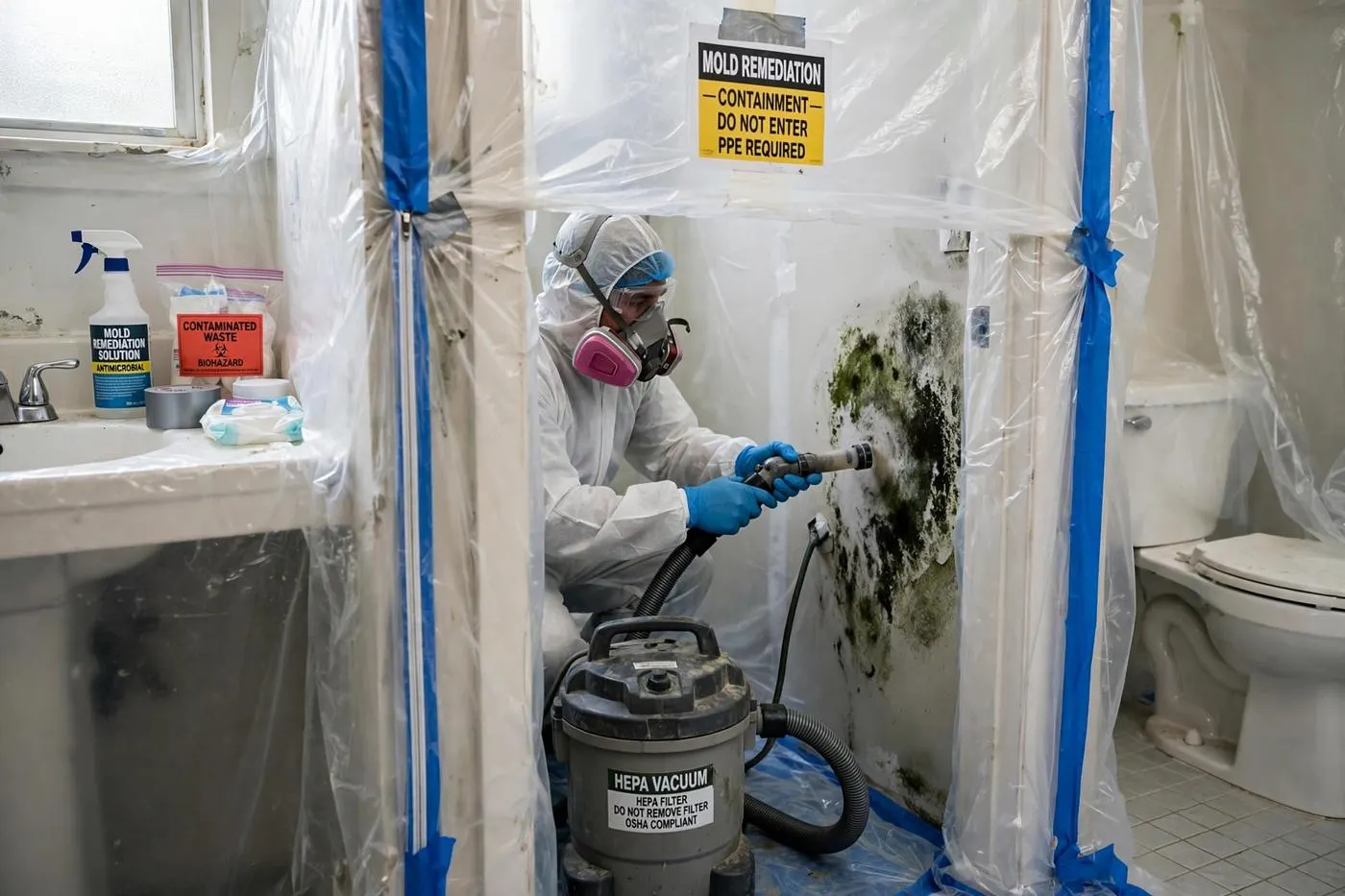
What mold remediation in Wellington, FL actually involves
Remediation is not spraying a chemical and painting over the stain. It is a controlled process: identify where the water came from, contain the affected area, remove the material mold has colonized, clean what can genuinely be saved, and dry everything back to normal moisture levels so the growth has nothing to feed on.
You likely need remediation, not a surface wipe-down, when growth covers more than a small patch, keeps coming back after cleaning, sits inside a wall, ceiling or air handler, or follows a leak, flood or sewage event. A musty smell that never leaves, especially when the air conditioning kicks on, is another common sign that the colony is somewhere you cannot see. In South Florida humidity, mold can start growing on wet drywall, carpet pad and insulation within a day or two of a leak, which is why the moisture source matters as much as the visible growth.
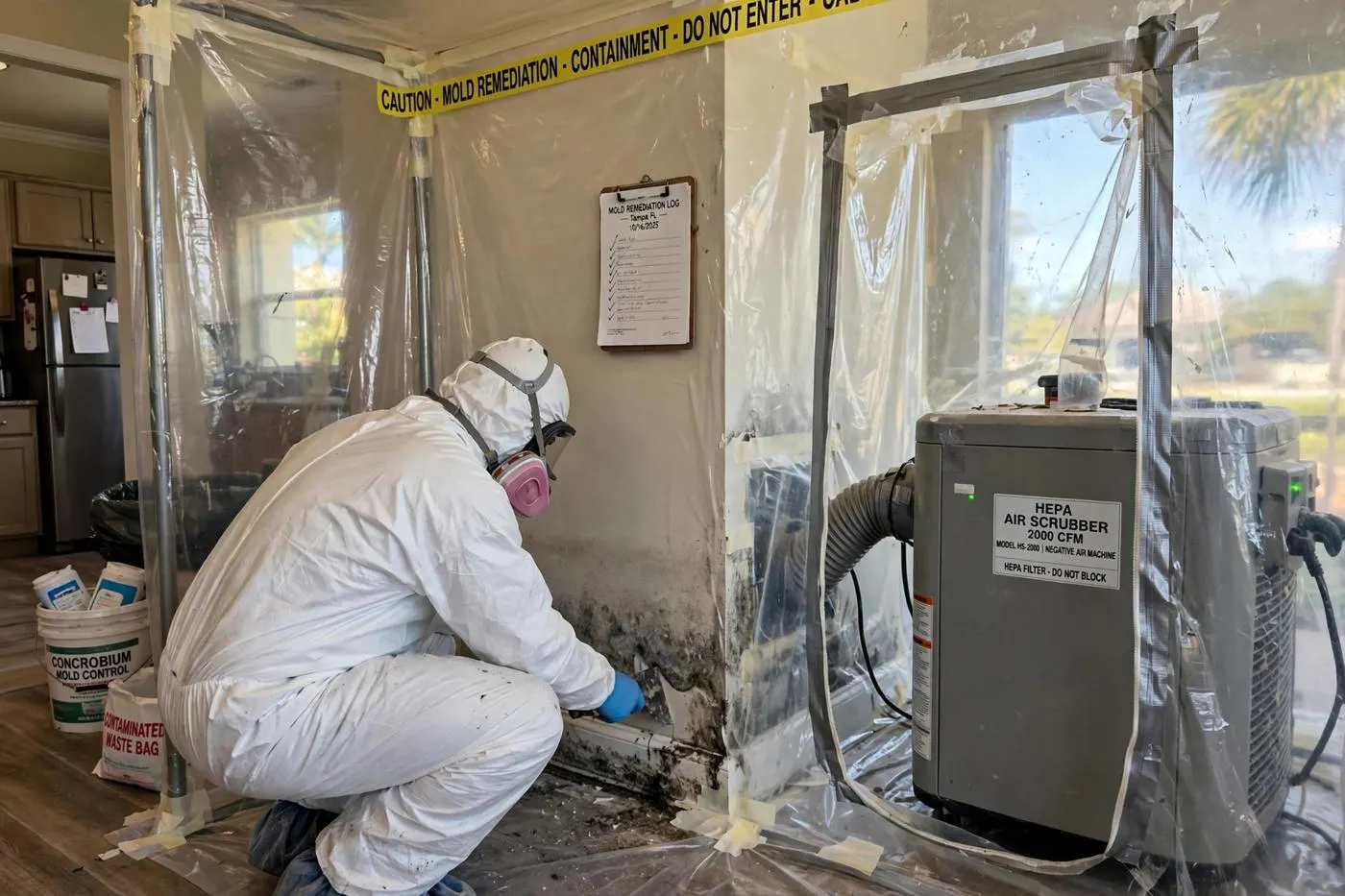
Remediation vs removal: two words, one honest job
People search for both mold removal in Wellington, FL and mold remediation, and the two phrases point at the same need. Here is the honest difference. No company can remove every mold spore from a home, because spores exist naturally in outdoor and indoor air everywhere in Florida. Anyone who promises total removal is overselling.
Remediation is the accurate word for the real job: bring the indoor environment back to a normal condition by removing colonized material, HEPA-cleaning the space, and correcting the moisture problem that allowed growth. When we finish a remediation, the goal is a home where mold is no longer growing indoors, not a sterile laboratory. If you want proof the work did what it should, independent sampling after the job is available through our mold testing service.
How we handle it: containment first, then removal
Assessment and moisture mapping. We inspect the affected rooms and the likely water source, using moisture meters to find how far the wet material extends beyond the visible growth.
Containment. We seal the work area with plastic barriers and run negative air pressure so disturbed spores are pulled into filtration instead of drifting into clean rooms.
HEPA filtration. Air scrubbers with HEPA filters run during the work, and we HEPA-vacuum surfaces before and after removal. Fine particles are the whole battle in mold work.
Removal. Porous material that mold has grown into, such as drywall, insulation and carpet pad, comes out and is bagged inside the containment. It cannot be reliably cleaned, and pretending otherwise is how jobs fail.
Cleaning and drying. Salvageable surfaces are cleaned and treated, then the structure is dried and checked with moisture readings before containment comes down.
Mold room by room: where Wellington homes grow it
Attic. Roof leaks, clogged condensate lines and bath fans vented into the attic instead of outside all load the attic with moisture. Growth spreads across roof decking and insulation quietly, often for months.
Bathroom. Failed shower pans, tired grout and plumbing leaks inside vanity walls feed growth behind tile and cabinets. Exhaust fans that never get switched on make it worse.
Ceiling. A ceiling stain usually means water from above: an upstairs bath, an air handler condensate overflow, or a roof leak. The colony often sits on the back side of the drywall, far wider than the stain below.
Closets. Exterior-wall closets with little airflow are classic Wellington mold spots, especially in seasonal homes closed up for months. Leather goods, luggage and stored clothing come out musty because the closet was growing mold all summer.
Why Wellington homes grow mold so easily
Wellington sits on a high water table, laced with the Acme Improvement District canal system and community lakes, so the ground and the air stay wet for much of the year. Add summer storms, stucco that wicks moisture through hairline cracks, and air conditioners that drip condensate every day they run, and a small leak becomes a colony quickly.
The seasonal pattern is the local multiplier. Many Wellington homes, especially in the equestrian areas around Palm Beach Point and Saddle Trail, sit closed from spring through late fall with the air set high or off. One slow leak in a shut house can grow undisturbed for months, and owners often meet it for the first time when they return for the Winter Equestrian Festival season. Barns, tack rooms and wash racks add damp, organic material right next to living space. Our scopes account for how Wellington homes are actually used, not just how they are built.
What affects the cost of mold remediation
The price drivers are the size of the affected area, the material involved, and access. A contained bathroom wall is a different job from a full attic with contaminated insulation. Containment requirements, disposal, and whether the leak repair itself is part of the scope all move the number. We write an exact scope after inspection, before work starts, and our water damage cost guide explains how remediation pricing is built so you can follow every line.
For the federal guidance homeowners ask us about, the EPA mold page is the plainest summary we know: epa.gov/mold.
Related services
Mold testing tells us what we are dealing with before the scope is written, and verifies the result after. Because mold is always a water problem first, our water damage restoration work handles the leak, flood or overflow behind the growth. When furniture, rugs or gear need to come out during a job, contents cleaning covers cleaning and pack-out.
Frequently Asked Questions
How much does mold remediation cost in Wellington, FL?
It depends on the size of the area, the materials involved and how much containment the job needs. A single bathroom wall and a whole attic are priced very differently. We inspect first and give you a written scope with an exact number before any work begins.
Can I just bleach the mold and paint over it?
On non-porous surfaces like tile, a small patch can be cleaned. On drywall, wood or insulation, bleach does not reach the growth rooted inside the material, and paint seals in moisture that keeps feeding it. That is how small patches become wall cavities full of mold.
Is black mold more dangerous than other mold?
Color alone does not identify a species, and dark molds are not automatically the worst ones. We treat any indoor growth the same controlled way, because the right response is removal and moisture control, not guessing from color. Sampling through our testing service can identify species when that information matters to you.
How long does mold remediation take?
A small, contained job can be finished in a day or two. Larger projects involving attics, multiple rooms or significant drying run several days. Verification sampling, when you choose it, adds lab time after the physical work is done.
Will the mold come back after remediation?
Mold returns when moisture returns. That is why our scopes include finding and fixing the source, whether it is a leaking supply line, a failed shower pan or a condensate problem. Remediation without source control is a temporary cleanup.
My Wellington home sits empty most of the year. How do I keep mold out?
Keep indoor humidity under control with the air conditioning or a dehumidifier running while you are away, and have the home checked after major storms. A pre-season inspection before you return catches slow leaks early, when they are still cheap problems.
Request an Assessment
Tell us what happened and where. We call back with a plan and an honest read on cost before any work starts. If water is actively spreading, call (728) 235-4938 instead, a conversation beats a form when the clock is running.
Request an Assessment
Tell us what happened. We call back with a plan and an honest read on cost before any work starts.