Home › Services › Water Damage Repair in Wellington, FL
Water Damage Repair in Wellington, FL
Water in the house is a clock, not a chore.
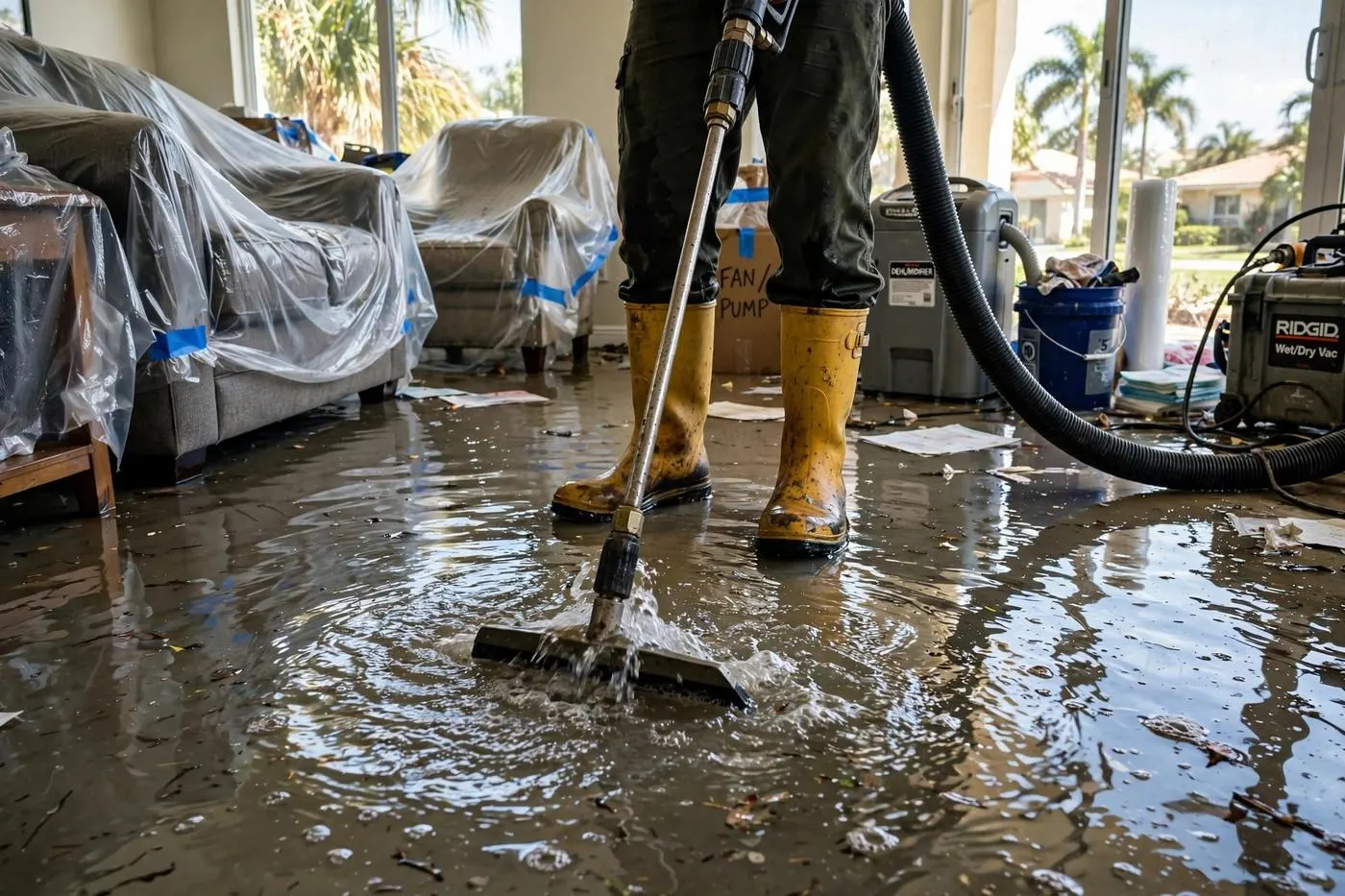
Emergency water extraction: the first hours decide the bill
Standing water moves. Our first job is to stop it moving.
Search "emergency water removal Wellington FL" at midnight and you will find franchises routing you to a call center two states away. We are here. Emergency extraction means extractors on the floor fast, furniture blocked and lifted, and the source shut off and identified. Every hour water sits, it wicks higher into drywall and feeds more mold spores. Water pulled in hour two is a drying job. Water pulled on day three is a demolition and mold job.
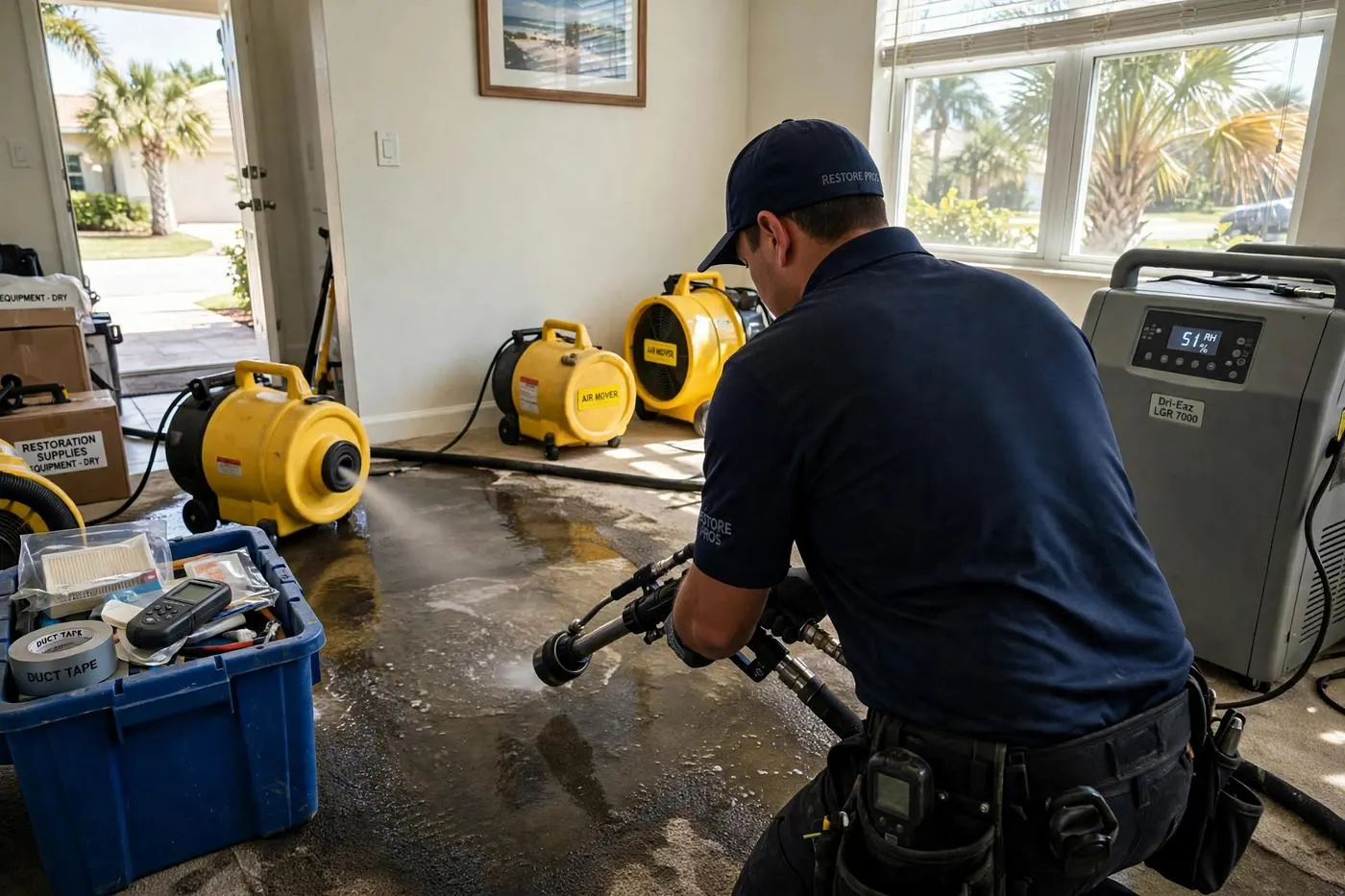
What water damage restoration in Wellington, FL actually involves
It is four disciplines wearing one name.
Real water damage restoration in Wellington, FL is extraction, structural drying, moisture verification, and documentation, in that order, with no step skipped. Extraction removes the water you can see. Drying removes the water you cannot: the moisture inside wall cavities, under hardwood, and inside the slab edge. Verification means moisture meters and thermal imaging proving the structure is back to normal moisture content, not a hand on the drywall and a shrug. Documentation means dated photos, meter logs, and a written scope your insurer can actually read. When a contractor quotes you a "dry out" without mentioning meters, they are selling you fans and hope.
Know your water: the three categories
Not all water is the same water, and the category changes everything.
Our Know Your Water finder on this page walks you through it, but here is the short version. Category 1 is clean water: a broken supply line, an overflowing sink, rainwater that has touched nothing dirty. Category 2 is gray water: dishwasher and washing machine discharge, toilet overflow without solids, water that has sat long enough to grow things. Category 3 is black water: sewage, rising floodwater, anything carrying pathogens. Category decides what we wear, what we can save, and what must come out. Clean water degrades a category for roughly every day it sits in a warm Wellington house, which is why the finder asks how long the water has been standing. Sewage events follow a stricter protocol entirely; see sewage cleanup.
Know Your Water
Three questions. We sort every loss this way before equipment ever turns on.
What causes it: the five we see most
Most Wellington water losses start small and quiet.
Burst and leaking pipes. Pinhole leaks in copper, failed CPVC joints, corroded fittings behind walls. The ceiling stain is the last chapter, not the first.
Appliance leaks. Washing machine hoses, dishwasher supply lines, ice-maker lines, and water heaters are the repeat offenders. A hose that lets go runs thousands of gallons before anyone notices.
Slab leaks. Most Wellington homes sit on a concrete slab, and pressurized lines run under it. A slab leak can run for weeks, surfacing as a warm spot on the tile.
Roof leaks. Summer storms drive rain sideways. Failed flashing or a lifted shingle lets water into the attic, where it shows up two rooms away from where it entered.
AC overflow. Air conditioning runs nearly year-round here, and condensate drains clog with algae. The overflow pan fills, the float switch fails, and water sheets down inside the wall.
How we handle it: extraction to verified dry
Same sequence, every job, no improvisation.
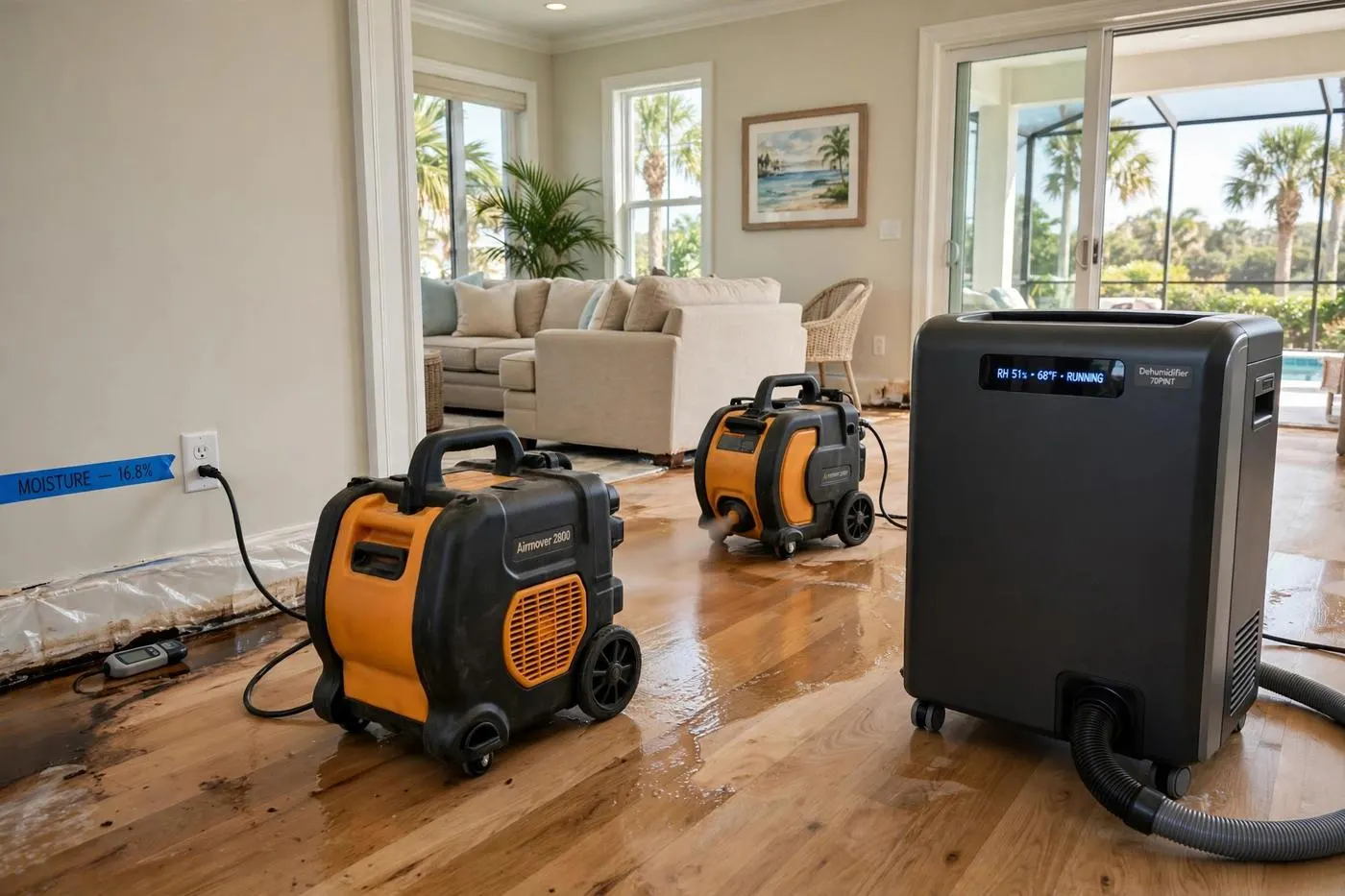
First we stop the source and make the area safe: water off, breakers checked, hazards flagged. Then extraction, with weighted tools for carpet and hard-surface extraction for tile and wood. Next we map moisture with meters and thermal cameras so the drying plan targets actual water, not guesses. Air movers and dehumidifiers go in based on that map, and porous materials that cannot be saved, like soaked drywall and carpet pad, come out cleanly. We return daily to re-meter, adjust equipment, and log readings. The job ends when the readings say the structure is dry, and you get those readings in writing.
Structural drying and leak detection
Drying is a measurement exercise. Finding the source is a detective exercise.
Structural drying is where real restorers separate from rental-fan delivery services. We dry wall cavities with injected air, hardwood with mat systems that pull moisture through the boards, and cabinets in place where the meter says it is safe. Leak detection runs the other direction: thermal imaging, acoustic listening, and pressure testing to find a hidden leak before we open anything. A slab leak located to the inch means a small repair opening, not a trench across your living room. When the source is hidden, detection comes first: drying a house while the leak still runs is money into a bucket with a hole in it.
Water damage in Wellington homes
Village water behaves like village water: flat land, high water table, big rain.
Wellington sits inland on flat Palm Beach County ground with lakes, canals, and a water table that is never far below the slab. Summer afternoons bring fast, heavy storms, and hurricane season runs June through November. The housing stock adds wrinkles: equestrian estates around Palm Beach Point and the show grounds with barns, tack rooms, and well systems; gated lake communities like Olympia and Palm Beach Polo where a neighbor's leak can become your ceiling stain; and thousands of seasonal homes sitting closed and humid for months, where a slow leak runs undiscovered until the owners fly back in. Neighborhoods like Little Ranches, on wells and septic, need a crew that understands rural systems, not just city water.
What drives the cost
Category, size, and time. In that order, almost every time.
A clean-water extraction in one room and a category 3 loss across three rooms price very differently. The honest variables: how much area got wet, what materials are involved (tile dries cheaper than hardwood; hardwood cheaper than built-ins), how long the water sat before we got there, and what has to come out versus what can be dried in place. We scope on site with a moisture map and give you a written number before work starts. We will not quote blind over the phone, and you should be suspicious of anyone who does. For the full breakdown, see our water damage cost guide.
The drying standard behind our readings is the IICRC S500, published by the Institute of Inspection, Cleaning and Restoration Certification.
Related services
Water rarely travels alone. When a loss has been sitting, mold remediation usually follows the drying. If a storm put the water there, storm damage restoration covers the roof and structure side. Fire losses almost always include suppression water; that work starts on our fire damage restoration page.
Frequently Asked Questions
How fast do I need to act after water damage in Wellington?
Today. In Florida humidity, mold can start growing on wet drywall within 24 to 48 hours, and clean water degrades a category roughly every day it stands. Extraction within the first hours is the difference between a drying job and a remediation job.
Can you save my hardwood floors after a leak?
Often, yes, if we reach them early. Cupped hardwood can frequently be flattened with mat drying systems that pull moisture through the boards over several days. Floors that have buckled or sat wet for a week are weaker candidates. We will meter them and tell you honestly which way it looks.
My Wellington home sits empty all summer. What should I do about water risk?
Shut the water off at the main when you leave, or have an automatic shutoff with leak sensors installed. The worst seasonal-home losses we see ran for weeks because nobody was there. If you come back to damage, call before you run the AC, which can spread moisture through the ductwork.
Will you work with my insurance company?
We document every job with dated photos, moisture logs, and a written scope, and we will walk your adjuster through the file. Coverage decisions are your insurer's to make, and we will never promise you an outcome on their behalf. The documentation is the part we control, and we take it seriously.
Request an Assessment
Tell us what happened and where. We call back with a plan and an honest read on cost before any work starts. If water is actively spreading, call (728) 235-4938 instead, a conversation beats a form when the clock is running.
Request an Assessment
Tell us what happened. We call back with a plan and an honest read on cost before any work starts.