Home › Services › Sewage Cleanup in Wellington, FL
Sewage Cleanup in Wellington, FL
A sewage backup is the one water problem you should never try to mop up yourself. Sewage cleanup in Wellington, FL follows a strict category 3 protocol because the water carries bacteria, viruses and whatever else the drain line holds. Our crews extract the contaminated water, remove the porous material it touched, disinfect the structure, and dry what remains, so the room is safe to live in again instead of just looking clean.
What counts as category 3 water
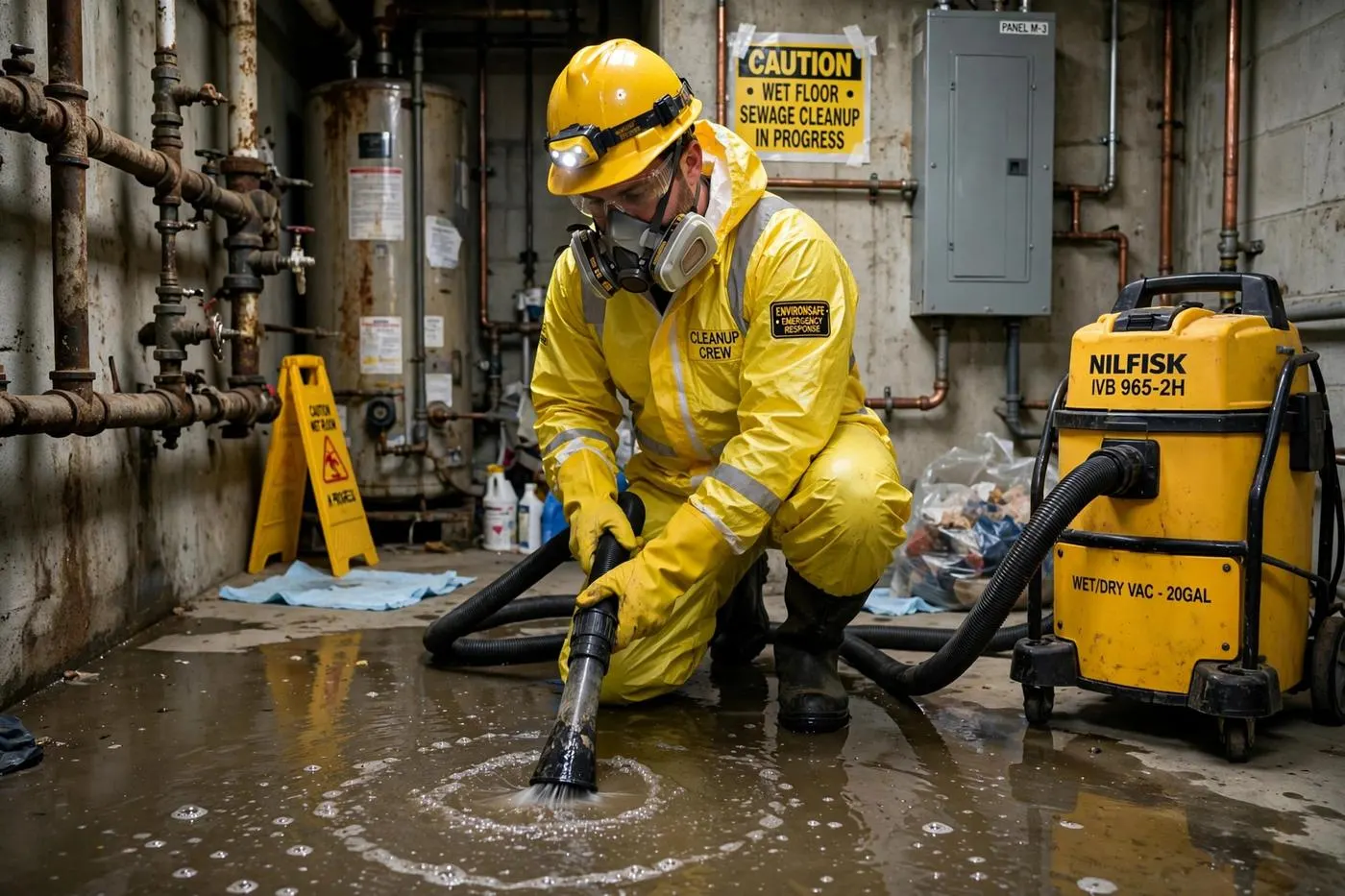
The restoration industry sorts water into three categories by how contaminated it is, and sewage is category 3, the grossly contaminated class. That includes toilet overflows that involve feces, sewer line backups, septic system failures, and outside floodwater that has crossed the ground, because groundwater picks up chemicals, waste and debris on its way in.
Category 3 changes everything about the job. Porous materials that absorbed it, like carpet pad, insulation and the bottom of drywall, cannot be reliably disinfected and have to come out. Fans must not run on a wet sewage area before extraction, because moving air aerosolizes contaminants and spreads them. Kids and pets stay out of the space until it is cleaned and disinfected. And the clock matters: in Florida heat, a sewage loss left sitting becomes a mold job on top of a sewage job within a day or two.
Sewage cleanup in Wellington, FL: how the job runs step by step
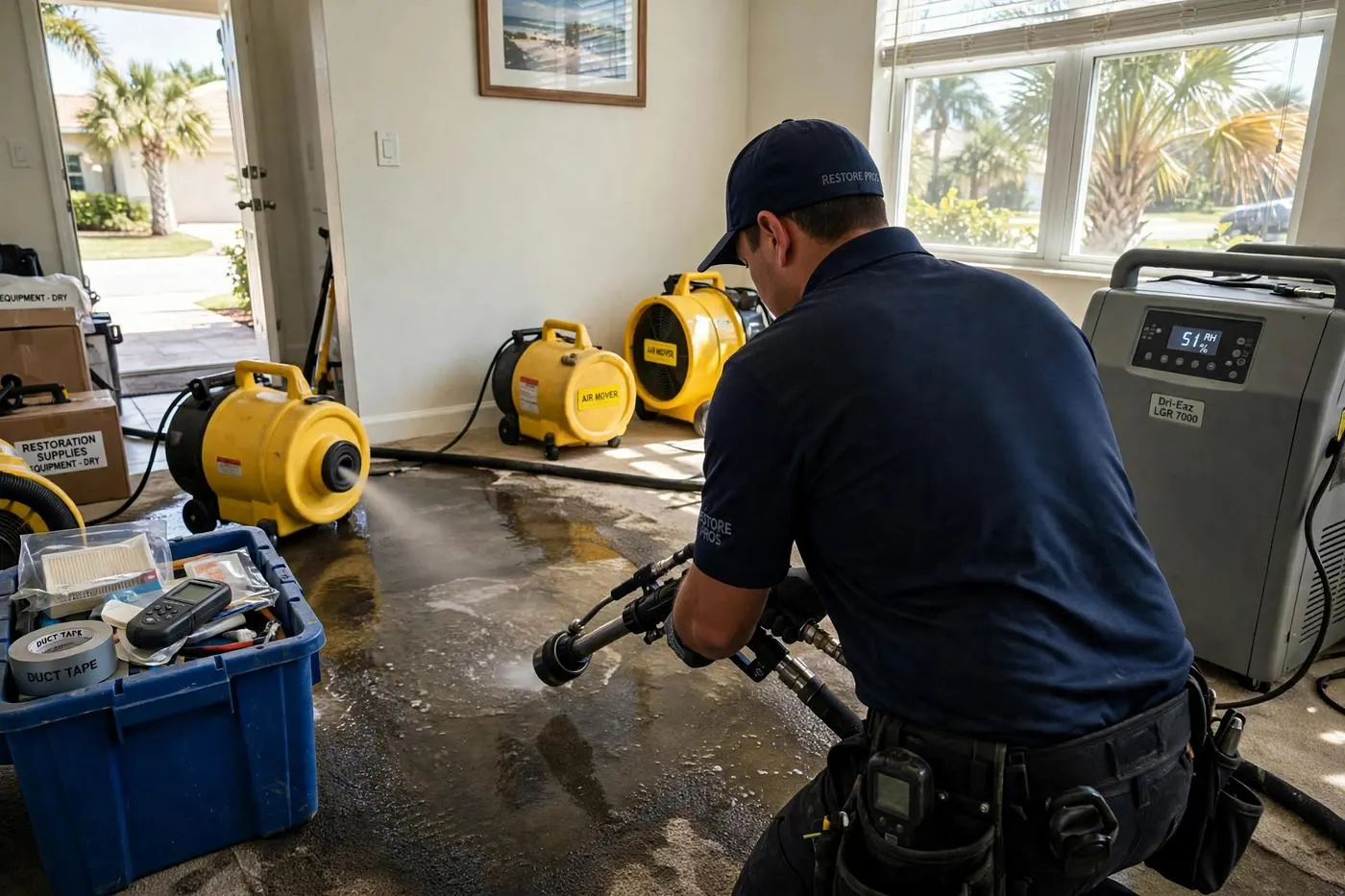
Protect and contain. The crew works in protective gear and seals off the affected area so contamination stays in one zone while we work.
Extract. We remove standing sewage and contaminated water with extraction equipment, including the water trapped in flooring and wall cavities.
Remove what cannot be saved. Carpet, pad, baseboards, insulation and drywall that absorbed category 3 water are cut out and bagged for disposal. This is the step DIY cleanups skip, and it is the step that decides whether the room is actually sanitary.
Clean and disinfect. Hard surfaces are cleaned and treated with disinfectant appropriate for sewage contamination. The structure is then dried with the same moisture-verified process we use on any water loss.
Verify dry and deodorize. We check moisture readings before closing up, and treat the odor at its source rather than covering it, because sewage odor lives in the materials that absorbed the water.
Why sewage backups happen in Wellington
Much of Wellington's west side runs on septic, not city sewer. In Little Ranches and the equestrian estates of Palm Beach Point, aging septic tanks and saturated drain fields are a standing risk: during the rainy season the high water table rises into the drain field, the system slows down, and the lowest fixture in the house becomes the overflow point. A septic backup after days of heavy rain is a pattern we know well.
In the older subdivisions, 1980s and 1990s cast iron drain lines corrode from the inside until they crack, collapse, or fill with scale and roots. Tree roots chase the moisture in those lines year round. Newer gated communities see a different failure: lift station and grinder pump problems, grease buildup, and the occasional foreign object that never should have been flushed. After major storms, the Acme canal system and saturated ground push water toward every weak point in a home's drainage, and a backup that looks like a plumbing problem is sometimes the whole neighborhood's water looking for somewhere to go.
What affects the cost of sewage cleanup
The honest drivers are the size of the contaminated area and how much material has to come out. A single tiled bathroom with a contained overflow is a short job. A backup that soaked carpet, pad and two walls of drywall is extraction, demolition, disposal, disinfection and drying over several visits. Septic situations can add tank and drain field work by a septic contractor, which we will flag honestly rather than bury in our scope. We write the full scope after inspection, and our water damage cost guide explains how category 3 pricing is built.
Related services
Sewage and clean water follow different rules, but the drying science is shared, and our water damage restoration page covers the broader process. Losses involving trauma or other biological hazards belong with our biohazard cleanup team. And because a wet structure grows mold fast in this climate, mold remediation is the follow-on service when a sewage loss sat too long before anyone called.
Frequently Asked Questions
Is it safe to clean up a sewage backup myself?
For a tiny, contained overflow on hard tile that you catch immediately, careful cleaning with gloves and disinfectant is reasonable. Anything that soaked carpet, pad, drywall or cabinets, or anything from a sewer or septic backup, should be handled as category 3 work with proper extraction, removal and disinfection.
What has to be thrown away after a sewage backup?
Porous materials that absorbed the water: carpet and pad, insulation, the affected section of drywall, and soft contents that cannot be properly disinfected. Tile, concrete and solid framing can be cleaned and disinfected. We document everything removed, which helps if you file an insurance claim.
My septic tank backed up. Is that different from a city sewer backup?
The cleanup protocol is the same category 3 process. The difference is the cause: a septic backup often means a full tank or a failing drain field, so once the house is clean, the septic system itself needs attention or the backup will repeat. We will tell you plainly if that is what we are seeing.
How fast does mold follow a sewage loss?
In Florida heat and humidity, mold can begin growing on wet material within a day or two. That is why extraction and drying happen on the first visit, not after the demolition dust settles. A sewage job handled promptly is one job instead of two.
Request an Assessment
Tell us what happened and where. We call back with a plan and an honest read on cost before any work starts. If water is actively spreading, call (728) 235-4938 instead, a conversation beats a form when the clock is running.
Request an Assessment
Tell us what happened. We call back with a plan and an honest read on cost before any work starts.